
Family Therapist & Dating Expert
Sarah Blake is a family therapist and dating expert focused on meaningful relationships in later life.
Updated August 16, 2026
Bumble vs Hinge for Over 50: Which Dating App Is Better in 2026?
For most singles over 50 who want a serious relationship, Hinge is the stronger first app to try because its profile-and-prompt format gives you more context before matching. Bumble is a strong alternative when you prefer a swipe-first interface, Opening Moves, or built-in voice and video calls.
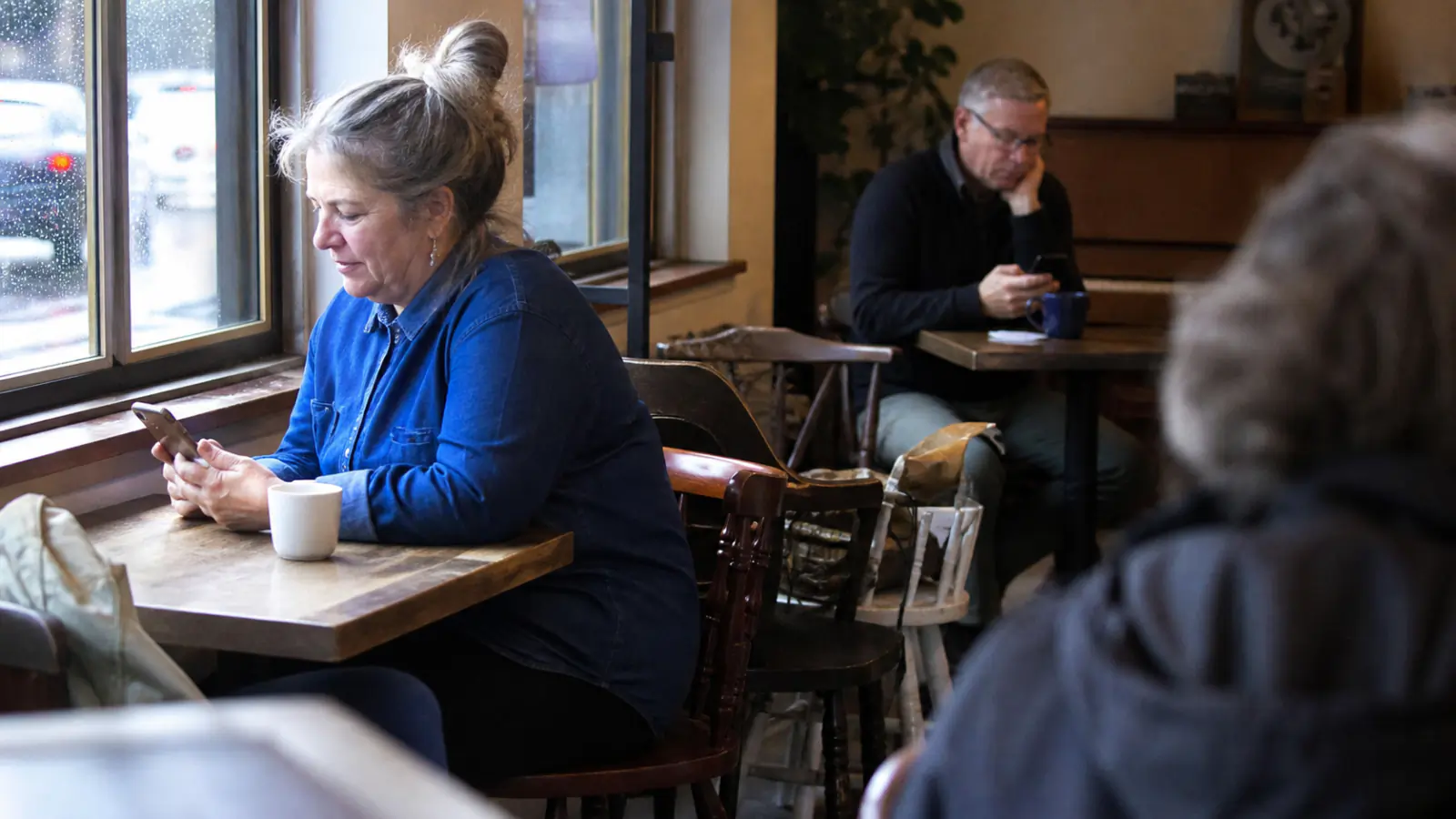

Start with Hinge if you want profile depth and conversation-first matching. Start with Bumble if you prefer a familiar swipe interface, more control over how conversations begin, or in-app video calling before a date. In either case, local match quality matters more than any national ranking, so the best practical test is to run both free versions for one week in your area.
| Feature | Bumble | Hinge |
|---|---|---|
| Profile style | Swipe-first profiles with prompts and interests | 4–6 photos depending on local requirements plus 3 prompt answers |
| Conversation start | Opening Moves can let a match reply to a preset question | Likes can target a specific photo or prompt and include a message |
| Free likes | Daily allowance | Limited number per day |
| Paid tiers | Boost, Premium, Premium+ | Hinge+, HingeX |
| See incoming likes | Available with Premium | All incoming likes at once with Hinge+ / HingeX |
| Voice / video calls | In-app voice and video calls available | In-app voice/video calls were removed; voice notes remain |
| Verification | Photo Verification; mandatory in some regions including the U.S. | Selfie Verification; Face Check required in some regions |
| Best fit | People who like classic swiping and flexible conversation controls | People who want more profile context before matching |
If you are returning to dating in your 50s, the question is not really “Which app is best?” It is which app makes it easiest for you to identify compatible people without turning dating into a second job.
Bumble and Hinge can both work for that, but they solve the problem differently. Bumble still feels closer to the familiar swipe-app model. Hinge makes you slow down and react to specific photos or prompt answers, which gives you more information before you decide whether someone is worth a conversation.
That difference matters more at 50 than it did at 25. You may be dating after divorce, balancing children or grandchildren, protecting an established routine, or simply unwilling to waste a month on a vague “let's see what happens” connection.
This comparison focuses on those practical trade-offs rather than pretending one app wins for every person in every city.
The most useful answer: test your local pool, not the brand name
Neither Bumble nor Hinge publishes a reliable city-by-city count of active users over 50. That means claims such as “Bumble always has more people over 50” or “Hinge has the fastest-growing 50+ audience” should be treated cautiously unless a source can actually prove them.
Your results can be completely different in Manhattan, a mid-sized suburb, and a rural county.
The fastest way to answer the audience-size question is surprisingly simple:
- Create a complete free profile on both apps.
- Use the same age and distance preferences.
- Spend 10–15 minutes a day on each for seven days.
- Count profiles you would genuinely consider — not total profiles shown.
- Compare meaningful matches and conversations, not raw likes.
That one-week test tells you more about your real dating market than a national “best app” list.
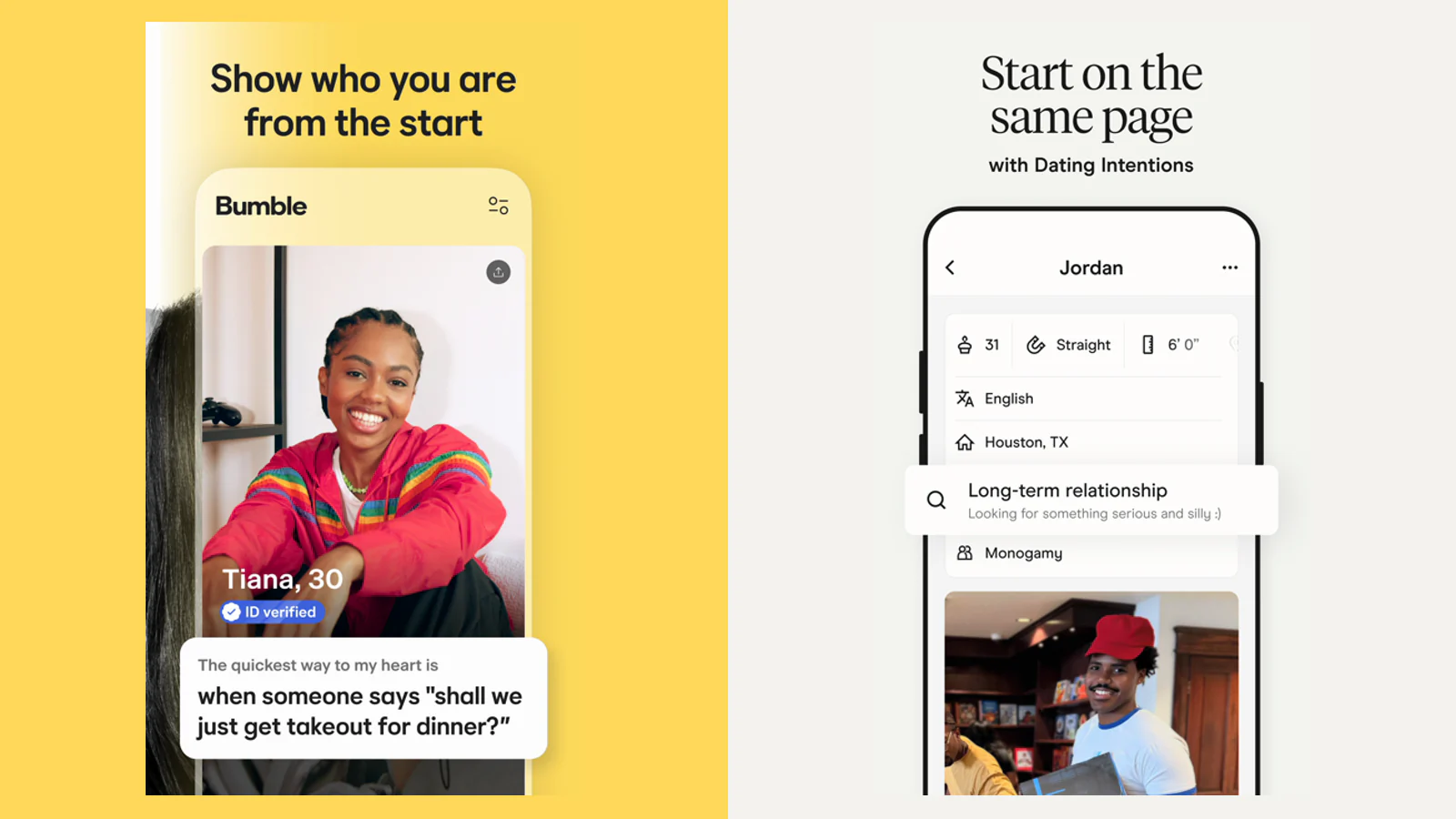
Profile depth: Hinge has the clearer advantage
Hinge is designed around a richer profile. Its current profile requirements call for four to six photos depending on local requirements and three prompt answers. You can react to a specific part of a profile instead of simply liking the person as a whole. Hinge also continues to expand prompt-based features, which makes profiles useful as conversation material rather than just a photo stack.
That is valuable for mature daters because compatibility questions become more specific with age. “Attractive” is not enough. You may want to know whether someone travels constantly, drinks every night, has adult children at home, wants marriage again, or values a quiet Sunday more than a packed social calendar.
Bumble profiles can still carry plenty of information, including prompts and interest badges, but the core discovery experience remains a more traditional swipe-right/swipe-left flow.
Practical edge: Hinge if you want more context before deciding.
Conversation mechanics: Bumble is no longer simply “women message first”
Bumble's older reputation is that women always have to invent the opening message. That description is now incomplete.
Bumble's Opening Moves let women and nonbinary members set up to three questions or prompts. A match can respond to an Opening Move to begin the conversation, even when it would otherwise be the other person's turn to make the first move. In heterosexual matches, women still control the first-move setup, but Opening Moves reduce the pressure to write a brand-new opener for every match.
That can be useful at 50+ because it lets you turn the first message into a filter. Instead of “Hey,” use something that reveals lifestyle or personality:
- “What does your ideal Sunday look like?”
- “What trip would you happily take again?”
- “What are you looking forward to this year?”
Hinge takes a different approach. You can like a specific photo or prompt and attach a comment, so the conversation can begin around something concrete in the profile.
For someone who hates generic openers, Hinge usually creates the cleaner setup. For someone who likes setting one smart question and letting matches respond, Bumble's Opening Moves are useful.
Scenario 1: a 54-year-old man dating after divorce

Imagine you are 54, recently divorced after a long marriage, and your dating-app experience is close to zero.
Your biggest problem may not be “getting matches.” It may be communicating who you are in a format dominated by photos.
On Hinge, prompt answers give you room to show humor, routines and intentions. A line about cooking for friends, restoring an old motorcycle, training for a hiking trip, or wanting a relationship that still leaves room for independent hobbies tells a potential match more than another posed portrait.
You also do not have to wait passively for a match before saying anything useful. You can react to something specific in her profile and add a short comment.
A good Hinge opener is not a speech. It is one relevant sentence:
“That trail photo looks familiar — was that Acadia? I was there last fall.”
That tends to work better than trying to manufacture a clever pickup line.
Better first fit: Hinge, especially if you communicate better than you photograph.
Scenario 2: a 58-year-old woman who wants more control

Now imagine you are 58, independent, busy, and mostly worried about low-effort attention filling your inbox.
Bumble's conversation mechanics can be appealing because you can shape how the conversation opens. A thoughtful Opening Move functions like a lightweight screening question. Someone who gives a one-word answer to a question that matters to you has already told you something useful.
Hinge also offers good filtering before a conversation because incoming likes may be attached to a specific prompt or photo. But the experience is less about controlling the “door” and more about judging the quality of each like.
Better first fit: Bumble if conversation control matters more to you than profile depth.
Free versions: both are usable, but both deliberately create friction
Both apps offer a free version. Neither gives free users every convenience.
Bumble uses a daily like allowance. Paid plans can add unlimited likes and other features. Bumble currently offers Boost, Premium and Premium+ tiers; Premium includes features such as seeing who already liked you, advanced filters, Incognito Mode and Travel Mode.
Hinge also limits the number of likes free users can send each day. Hinge+ and HingeX unlock unlimited likes, the ability to view all incoming likes at once and advanced preferences; HingeX adds recommendation and visibility features.
For an over-50 dater, a limited number of likes is not automatically a disadvantage. If you are selective, the objective is not to approve 100 profiles. It is to identify a small number of people you would actually meet.
Do not use a fixed price table as your deciding factor
Subscription prices change by plan length, platform, market and promotional offer. Bumble explicitly states that pricing varies, and Hinge directs users to the subscription screen in the app to see available packages.
So a page claiming “Bumble is exactly $39.99 and Hinge is exactly $29.99” can become wrong quickly. Check the price shown on your device before buying.
A sensible strategy is to stay free until you know your local pool is worth paying to access faster.
Safety: there is one important Bumble vs Hinge difference in 2026

Both services offer verification and reporting tools, but their current communication features are not identical.
Bumble supports in-app voice and video calls, so you can speak face-to-face without giving someone your phone number first. Bumble also offers Photo Verification; in the United States, Bumble says Photo Verification is mandatory.
Hinge offers Selfie Verification, and in some regions it requires a biometric Face Check. But Hinge removed its in-app voice and video calling feature in 2025. Matches can still use messages and voice notes inside Hinge.
That means the safest pre-date workflow differs slightly:
On Bumble: match → chat → use the built-in video call → decide whether to meet.
On Hinge: match → chat/voice notes → if you want a video check, move to another video service only when you are comfortable doing so, while limiting the personal information you share.
On either app, treat verification as one signal rather than a guarantee. Hinge explicitly notes that a verification badge does not guarantee a person's identity or safety.
Simple romance-scam filter for daters over 50
Be cautious when someone:
- pushes you off the dating app almost immediately;
- avoids any real-time conversation while escalating intimacy quickly;
- creates an emergency involving money, crypto, gift cards or travel;
- has a profile that is polished but strangely empty of normal life details;
- repeatedly has a reason they cannot meet despite intense messaging.
Do not send money to someone you have only met through a dating app.
Best choice by situation
| Your situation | Better first app | Why |
|---|---|---|
| You want a serious relationship and hate shallow profiles | Hinge | More profile context and prompt-based interaction |
| You prefer classic swiping and a faster learning curve | Bumble | Familiar discovery flow |
| You want to video-call inside the dating app before meeting | Bumble | Built-in voice/video calling remains available |
| You are better at conversation than posing for photos | Hinge | Comments on prompts/photos give you more ways to stand out |
| You want to shape the first question matches respond to | Bumble | Opening Moves can act as a simple conversation filter |
| You are unsure which app has enough people near you | Both for 7 days | Local active-user density matters more than generic rankings |
Bumble: practical pros and cons for a 50+ dater
Pros
- Familiar swipe interface with a relatively low learning curve.
- Opening Moves make the first-message process more flexible than the old “women must always type first” rule suggests.
- In-app voice and video calls can reduce how quickly you need to share personal contact information.
- Paid tiers offer useful control features such as advanced filters, Incognito Mode and Travel Mode.
Cons
- Swipe-first discovery can encourage faster, more appearance-driven decisions.
- Matches still run on timers, which may be annoying if you do not check the app every day.
- The free version has a daily like allowance.
Hinge: practical pros and cons for a 50+ dater
Pros
- More profile information before you decide to like someone.
- Likes can focus on a specific photo or prompt and include a comment.
- Three prompt answers are part of the current profile structure.
- Hinge+ and HingeX add unlimited likes and more control over incoming likes and preferences.
Cons
- Free users have a limited number of daily likes.
- Hinge no longer has built-in voice/video calling.
- A detailed profile takes more work to build well; weak prompt answers can make an otherwise good profile look generic.
Which app is better for serious relationships after 50?
If we have to choose one app to install first, Hinge gets the edge for a serious relationship.
Not because Hinge has magically eliminated unserious people. It has not. The advantage is structural: the app gives you more material to evaluate and more natural ways to begin a conversation around something specific.
That is particularly useful after 50, when “Do I find this person attractive?” is only the first of many questions.
Bumble is still a strong first choice when its mechanics better match your personality — especially if you like swiping, value Opening Moves, or want the convenience of an in-app video call before meeting.
What I would do first
Do not buy two subscriptions on day one.
Use this sequence instead:
- Build one good photo set and use it on both apps.
- Write three specific answers about your actual life rather than generic traits such as “I love travel and laughter.”
- Run both free apps for seven days with the same age/distance range.
- Track only three numbers: people you genuinely liked, matches, and conversations you would continue.
- Keep the better-performing app for another few weeks.
- Only then consider paying if a premium feature solves a problem you are actually experiencing.
This turns the choice from “Which brand has the best reviews?” into “Which app gives me the better local dating pool?”
Frequently asked questions
Am I too old for Hinge?
No. Hinge does not position itself as an app with an upper-age cutoff for mature daters. The more relevant question is whether enough compatible users are active in your area. Test the free version before assuming the audience is too young.
Is Bumble still a women-message-first app?
In heterosexual matches, women still control the first-move setup, but Bumble's current Opening Moves feature changes how that works. A match can reply to an Opening Move to begin the conversation, so women do not necessarily have to write a unique first message every time.
How many free likes does Hinge give per day in 2026?
Hinge's current support documentation says free users receive a limited/select number of likes per day, but it does not publish one universal number in its main subscription documentation. Treat exact numbers quoted elsewhere as subject to account, market or product changes.
Do Bumble and Hinge both have video calls?
No. Bumble currently supports in-app voice and video calls. Hinge removed its voice/video calling feature in 2025, although Hinge still supports messaging and voice notes.
Which one is cheaper, Bumble or Hinge?
There is no reliable universal answer because subscription prices can vary by plan term, platform, location and offer. Compare the live prices shown in each app on the same day rather than relying on an old article screenshot.
Should I pay for Premium immediately?
Usually not. First confirm that the app has enough compatible people near you. Premium features can make discovery faster, but they cannot fix a weak local dating pool.
Sources and update notes
This page was checked against the companies' current help documentation in August 2026. Product features change, so we prioritize official product documentation for feature claims and avoid presenting variable subscription prices as fixed.
Rate this article
Comments
More in this Category

Advice for Mature Relationships After a Long Break
The Benefits of Mature Dating: Why Older Relationships Can Be Better Than Younger Ones

Dating Over 50: Finding Balance Between Freedom and Commitment
How to Build Healthy Relationships After Divorce in Mature Age

Hinge for Over 50: Is It a Good Dating App for Mature Singles in 2026?
Please sign in to leave a comment.
No comments yet.